

Companies often have to send out rewards in a tight timeline, to a large group with unknown preferences. In such moments, a gift card often feels like the easiest answer. And usually, it is. But what makes it work so consistently is not just convenience. It is the way it fits into real situations where one choice cannot satisfy everyone.
But the key to leveraging all the benefits is understanding what is a gift card, how do gift cards work and the different types of gift cards companies can choose from.
Key Takeaways
- A gift card is a prepaid tool that holds a fixed value linked to a unique digital or physical code.
- Gift cards are the most efficient way to reward large, diverse groups quickly without needing to know individual preferences.
- E-gift cards eliminate shipping costs and allow for instant, global distribution for employee or client incentives.
- Open-loop cards work at most merchants, while closed-loop cards are restricted to specific brands.
What is a Gift Card and Why is it Used?
Simply put, the answer to what is a gift card is that it has a prepaid value attached to a code or a card. That value can be used later for different purchases. This, coupled with the fact that it eliminates taking into account different preferences of the team members, is what makes it a popular choice.
Think about a team of fifty people where everyone has different choices. To meet everyone’s needs, you would need multiple gifts, which can be time-consuming and expensive. But a gift card solves this problem by letting the recipient choose what they want.
How Do Gift Cards Work?
One simple way of understanding how do gift cards work is looking at how a credit card is used. So, a value is assigned to the gift card and that value is stored in a system. When the card is used, the amount gets deducted.
Here’s a quick breakdown of how do gift cards work:
- The value is fixed at the time of purchase
- The card carries a unique code for tracking purposes
- The recipient can choose the store or brand to redeem the card
- Some cards allow multiple uses, others do not
- If partial redemptions are allowed, the card can be used until the balance runs out
Key Features That Define a Gift Card
There are a few things that make a gift card what it is.
- It holds value.
- It has a code linked to that value.
- It works within defined boundaries.
- It may come with a validity period.
- It can offer multiple redemption until the balance is exhausted.
These are small details, but they keep the system clean and predictable. That predictability is what makes gift cards easy to use at scale.
Types of Gift Cards You Should Know
When people talk about gift cards, they often assume it is one format, but it is not. There are several types of gift cards, each serving a different purpose. Some are tied to a single brand, whereas some work across multiple outlets. You can also get e-gift cards or cards linked to experiences.
Different Types of Gift Cards Explained
If you look closer, the differences in different types of gift cards become clearer. A brand-specific card limits where it can be used. That can be useful when the company wants to the purchase to be from a specific place. A multi-brand card opens things up; it gives the recipient more freedom.
A digital card removes the need for handling or shipping. That works well when teams are spread across locations. Understanding these different types of gift cards helps avoid default choices. It also allows better alignment with the company values and vision.
Open-Loop vs Closed-Loop Gift Cards
When it comes to open-loop vs closed-loop gift cards, the difference is about reach. Open-loop cards can be used across multiple merchants. Closed-loop cards are restricted to a specific brand or network. Both formats have their place and the choice depends on what is more important; flexibility or brand.
How Open-Loop and Closed-Loop Gift Cards Work
When you look at how open-loop vs closed-loop cards work, there is virtually no difference. The difference is in where these can be used. Open-loop cards can be used in multiple spaces, whereas closed-loop cards stay within a defined space. That small difference can shape the entire experience.
Examples of Gift Cards Across Brands and Categories
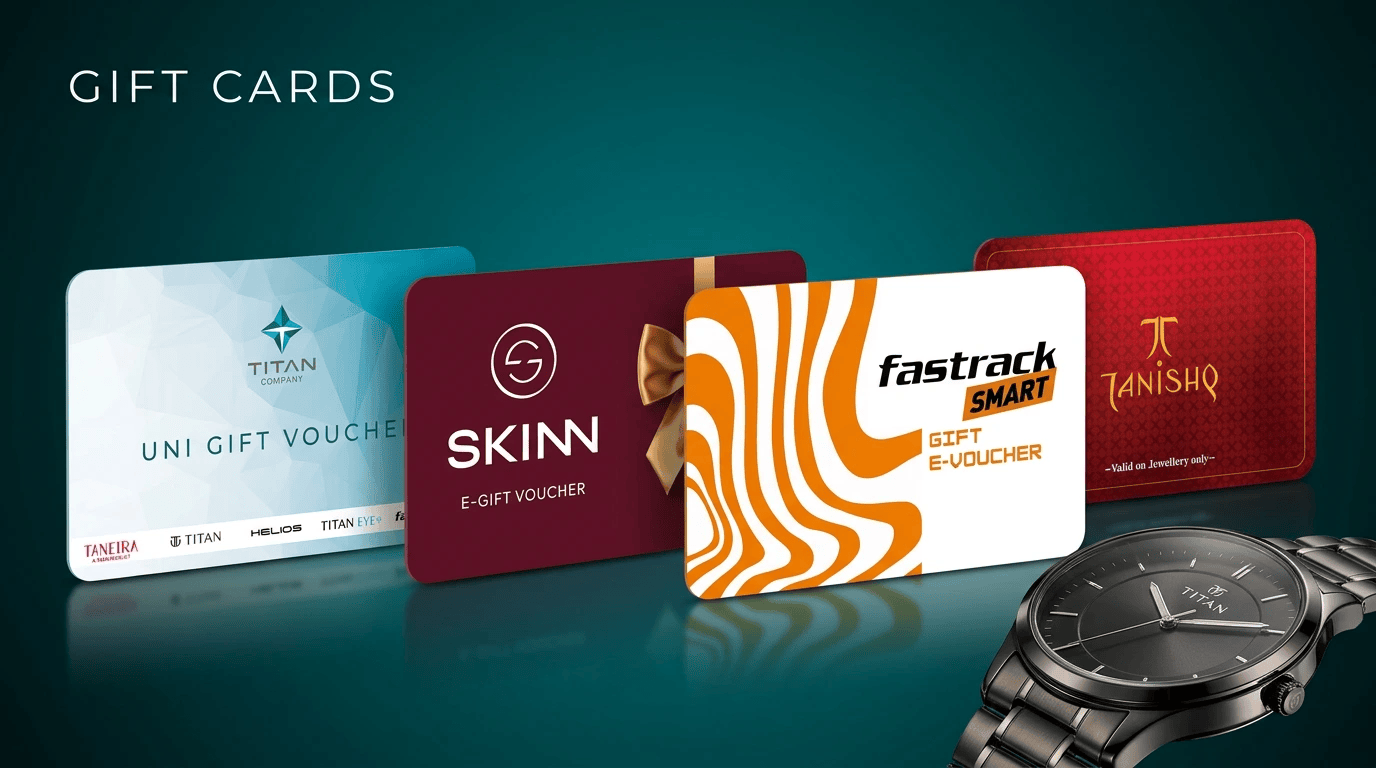
Understanding what is a gift card and how do gift cards works can be easier when you think in terms of real scenarios. Some examples of gift cards include:
- One that works across multiple retail stores
- Category-based card for lifestyle purchases
- Digital card tied to a specific platform
All different types of gift cards solve a slightly different need, but the common thread is flexibility.
Common Use Cases of Gift Cards
Gift cards fit well when the goal is consistency without removing personal choice. So, they can be ideal for many business situations because they are easy to manage. Some of these are:
- Employee recognition
- Sales incentives
- Client gifting
- Festival rewards
- Performance-based programs
Benefits of Using Gift Cards
The benefits of gift cards are not abstract. For instance, they reduce the sender's effort while increasing the usefulness for the receiver. A few other advantages include:
- No need to guess preferences
- Easy distribution across large groups
- Minimal logistics
- Clear value
When Should You Use a Gift Card?
There are moments when gift cards make more sense than anything else as they help remove complexity rather than add to it. Consider gift cards when:
- The group is diverse
- The occasion is neutral
- Time is limited
- Distribution needs to be quick
Things to Consider Before Buying a Gift Card
Even something simple needs a quick check. Before choosing a card, it helps to look at:
- How long does it stay valid
- Where it can be used
- Whether partial use is allowed
- How it will be delivered
These details do not take long to review, but they shape the recipient's experience.
Conclusion: Why Gift Cards Remain a Popular Choice
Gift cards have stayed relevant because they solve a real and recurring problem. They work when choices are unclear or when the scale increases and speed matters.
In the end, understanding what a gift card is is not about theory. It is about knowing when it fits and why it works because people remember what they felt with the gift, not just what it was. With gift cards, companies can get this part right without making the process complicated.